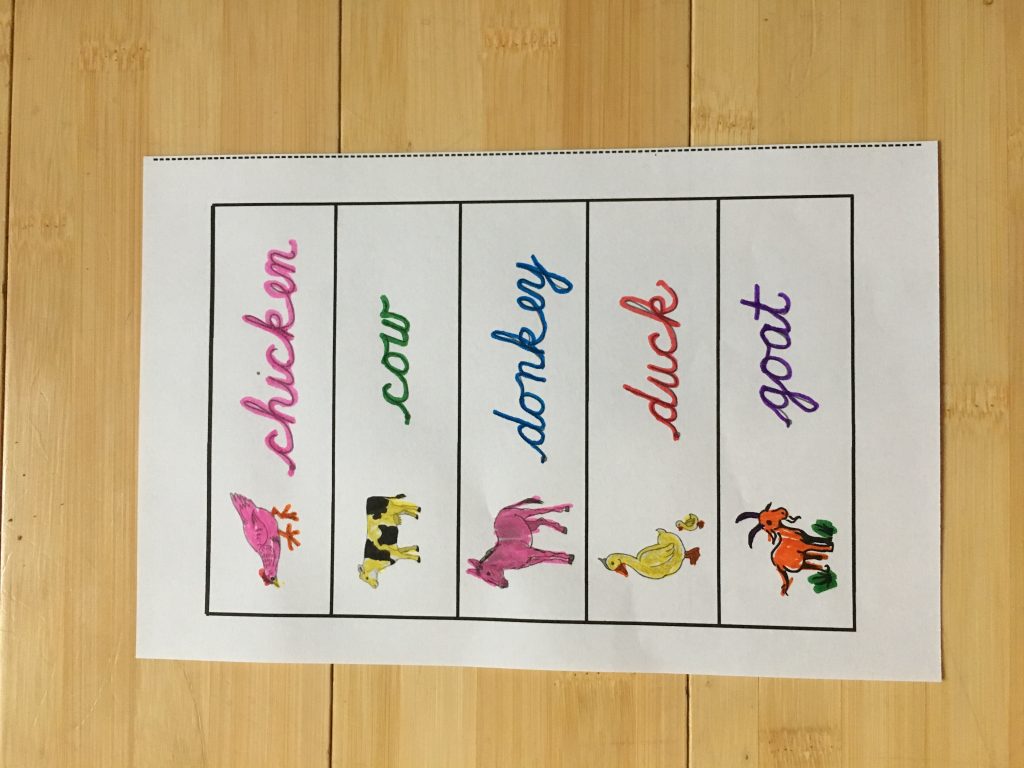
Cursive Writing Work and Print Writing.

Students can learn both print and cursive. They can choose. Most students try both and practice printing first. It is their choice and the teacher guides them when need be.

Montessori teachers of older students have discovered that those who have only learned cursive have difficulty when they have not been exposed to print writing. If they are not familiar with how to print, it is challenging for them.

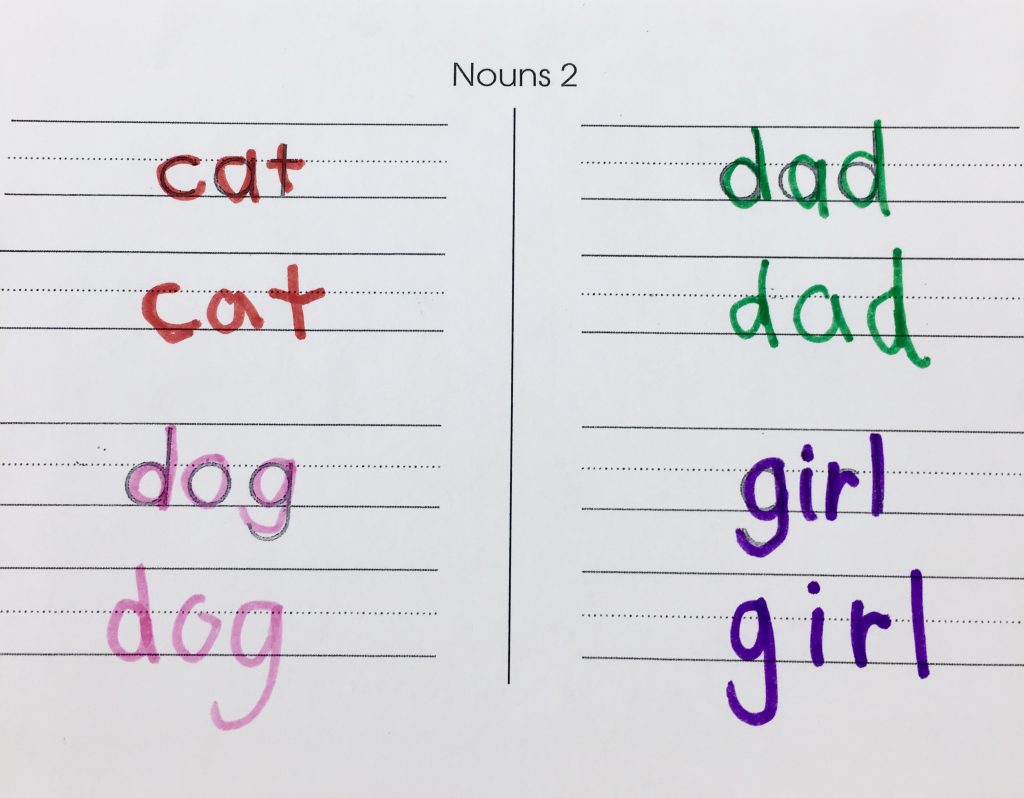
Students have the ability to learn both. It is better to allow them to learn both and choose their preference. The samples below were done by five-year-old students.
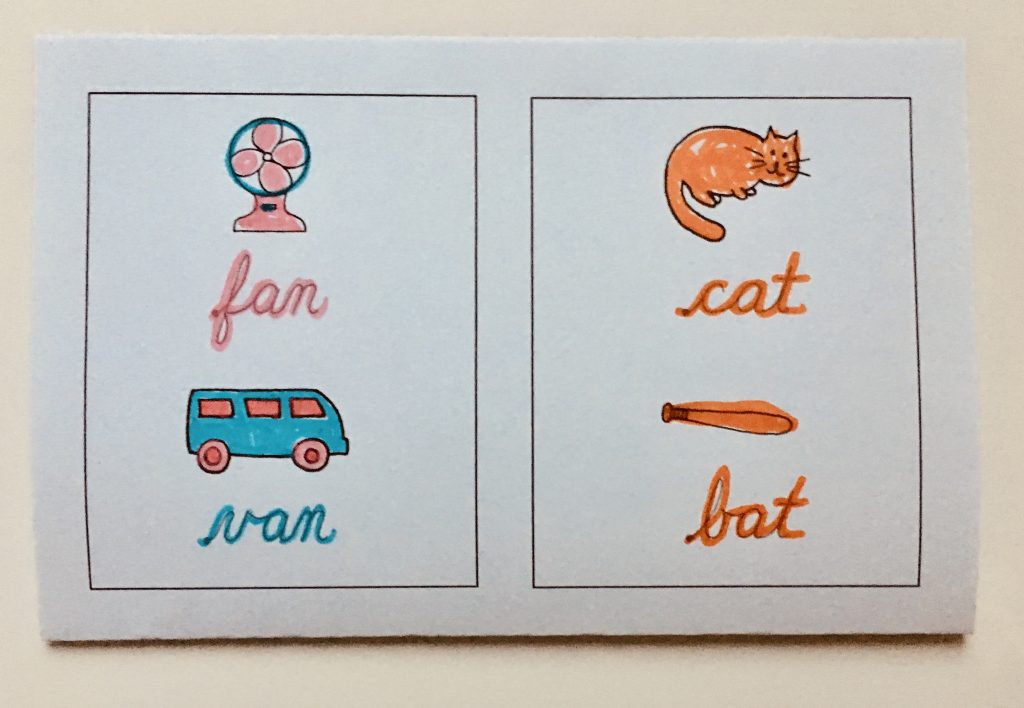
Students like to trace and copy. When they trace first, it builds muscular memory, and when they write it reinforces that memory.
As students learn to write, they like to have work where they can trace over words and then write the words.

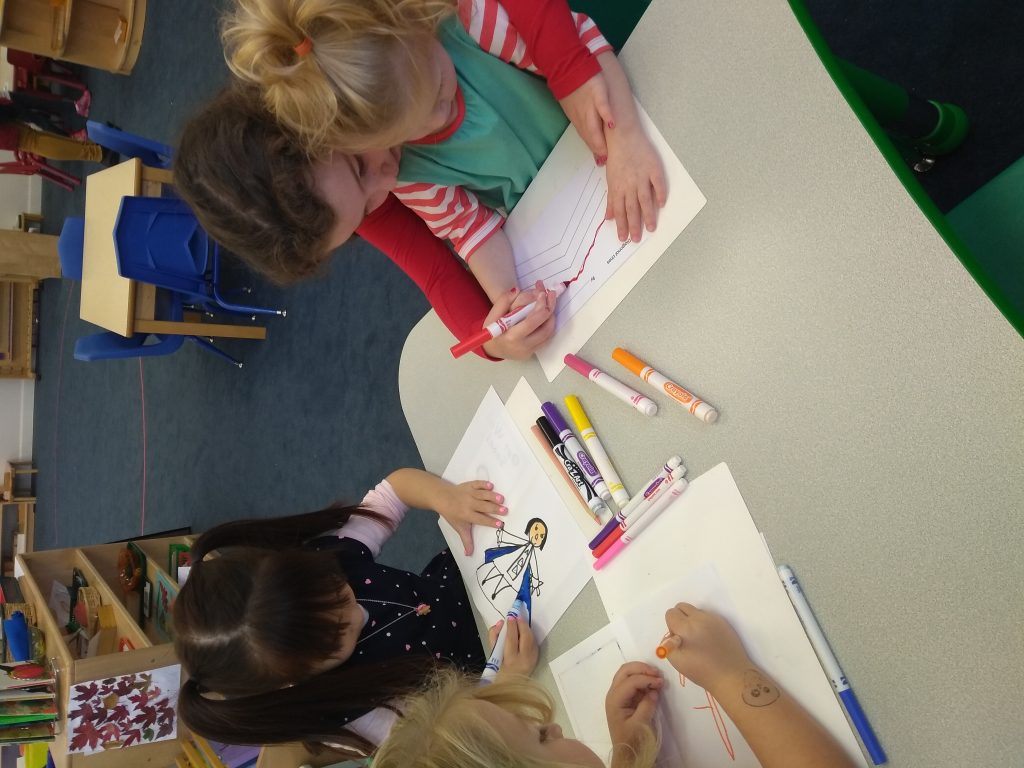
Students Helping Students

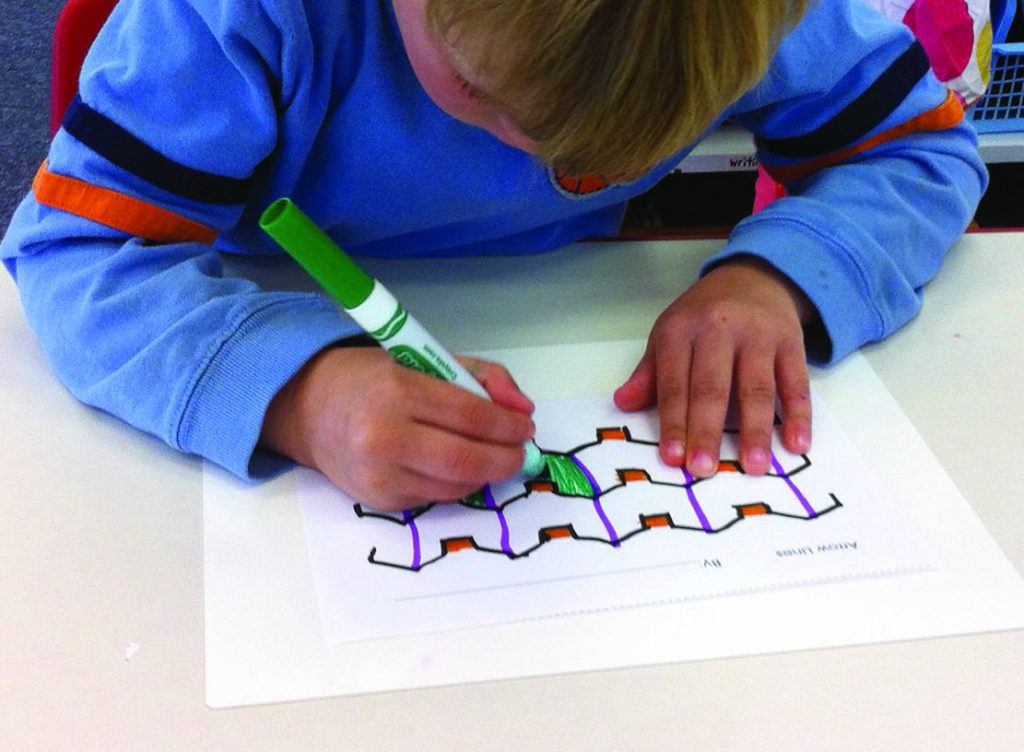
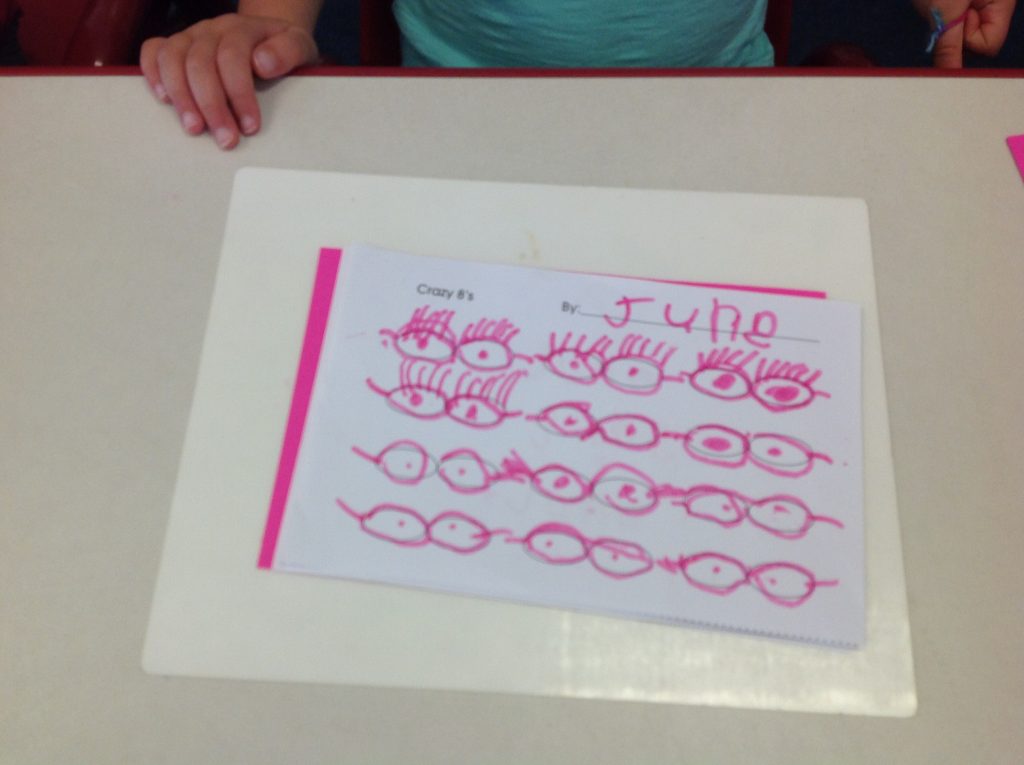
Pattern Writing is a work that most young children begin with. They trace over simple lines to build strength. It calms them. It centers them. At first, it can be very challenging. A teacher will place their hand over the child’s and guide them. This helps build the muscular memory. Teachers have discovered that some students with learning difficulties become far more centered after doing these exercises.

This work includes Zig Zag Lines, Vertical Lines, Diagonal Lines, Wavy Lines, Cloud Lines, Rainbow Lines, Rooftop Lines, Boat Lines, Crazy 8’s, Circles, Volcano Lines, Labyrinth, and more.

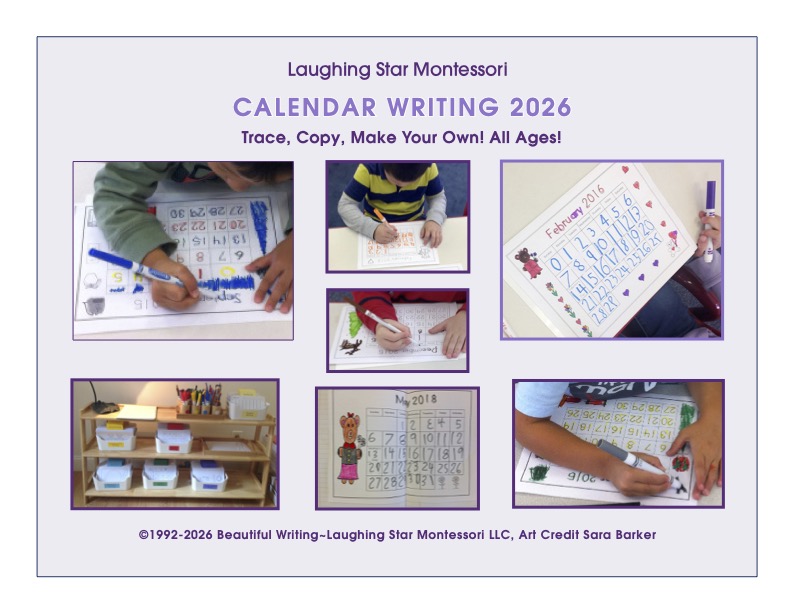
Calendar Writing Work

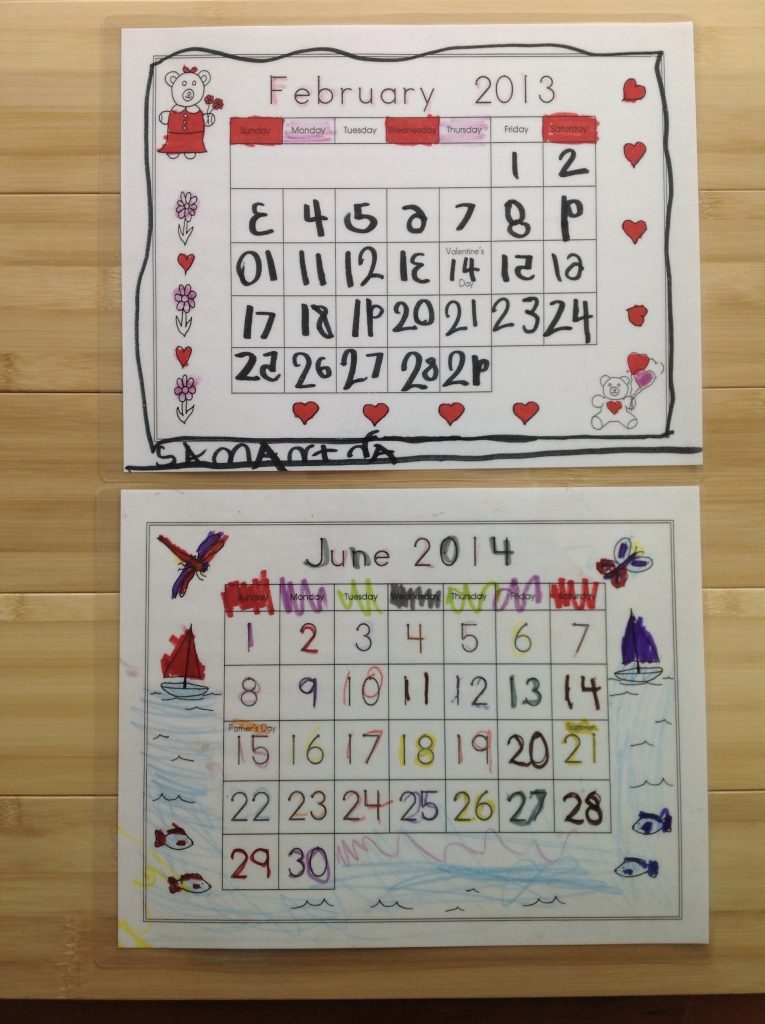
Copy the calendar tracer version and the copy version. Put them on a wooden tray. The copy version is placed on the tray with a sheet of colored paper over it. The tracer version is placed on top. It is what the students see when they choose the work.

The student chooses a writing mat from the writing shelf. The student takes it to a table. The student returns to the writing shelf and selects the tracer version of the calendar. The student returns to the table. The student places the tracer version of the calendar on their writing mat. Student returns to the shelf and picks out their age in markers. Thick crayola markers work best. Put the markers down by the mat.

The student traces the numbers on the calendar. The student colors in the drawings on the calendar.

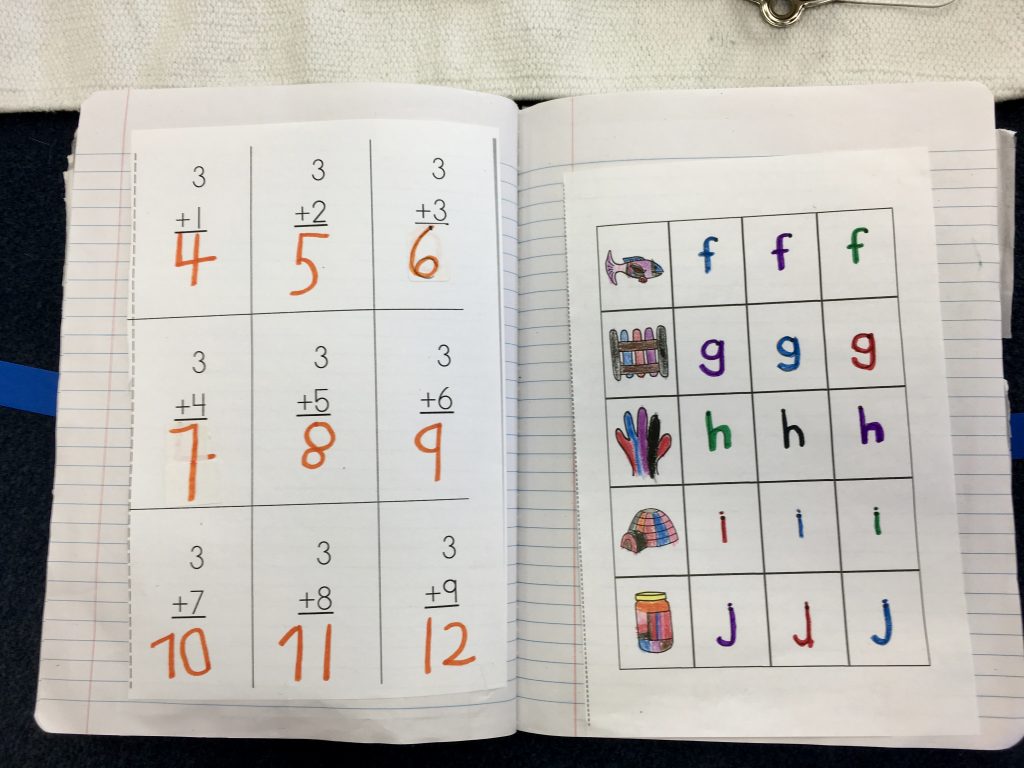
Most students like to tape a finished calendar in their journal. They also like to take a finished calendar home. One of my students made a calendar for each grandparent every new month. These things have great meaning for young children.

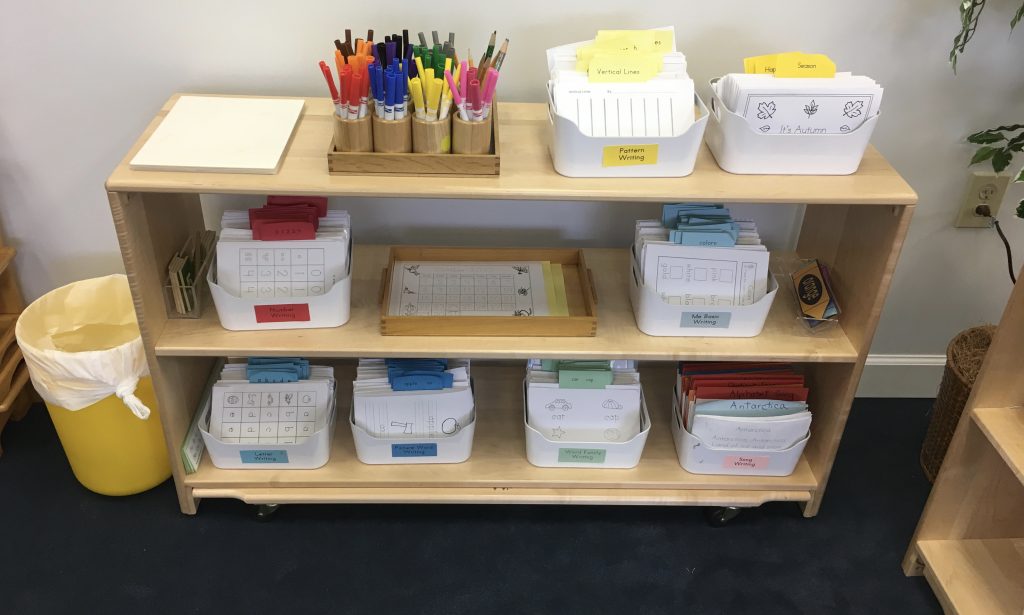
Setting Up The Writing Shelf

Students choose writing work from the shelf. They take their age in makers to a table. They return to the shelf to get their writing mat. They take it to the table. They return to the shelf and choose their age in writing sheets. They take these to their mat. One writing sheet is placed on the top of the mat. The others are under the mat.

Writing Sheet Work

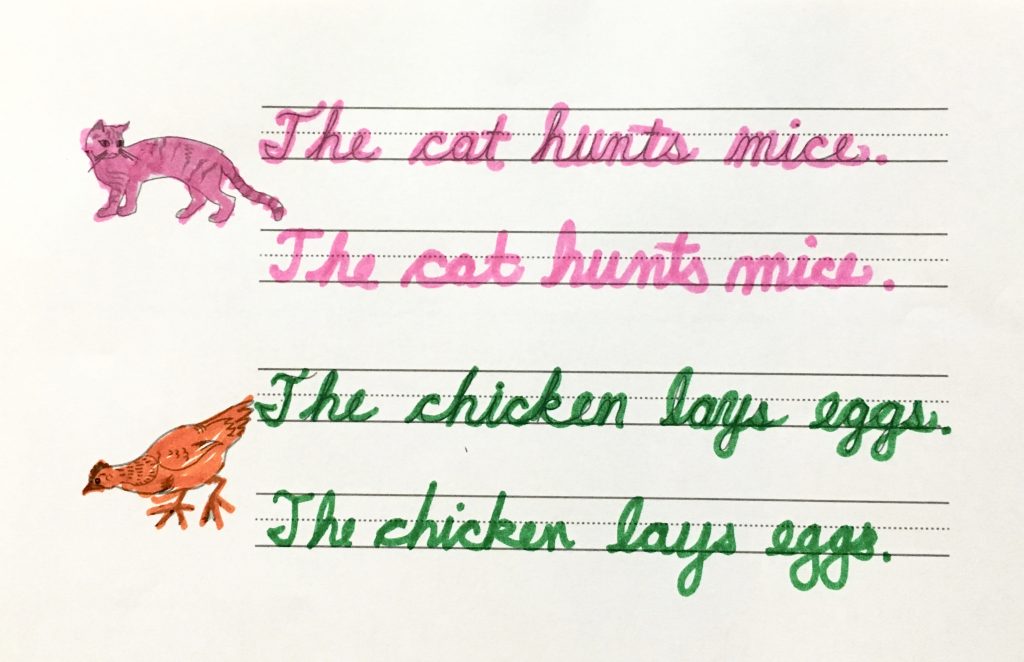
Students choose writing sheets. When finished, they tape them in their own Journal. This is typical work done by a 4 1/2 to 5-year-old.

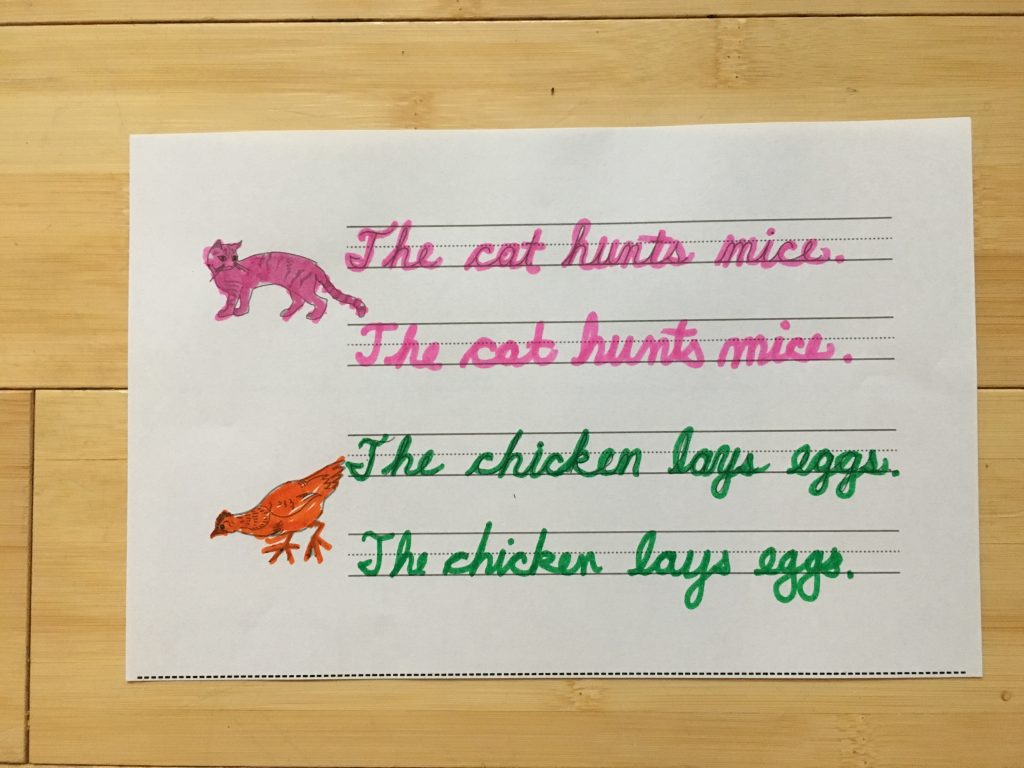
A student traces the sentence. The cat hunts mice. Then the student writes the sentence on the blank line below the one they traced.
This builds muscular memory and reinforces formation.
Writing in color is fun. The Crayola markers glide across the page. Students enjoy choosing colors and appreciate the visual appeal of their writing.